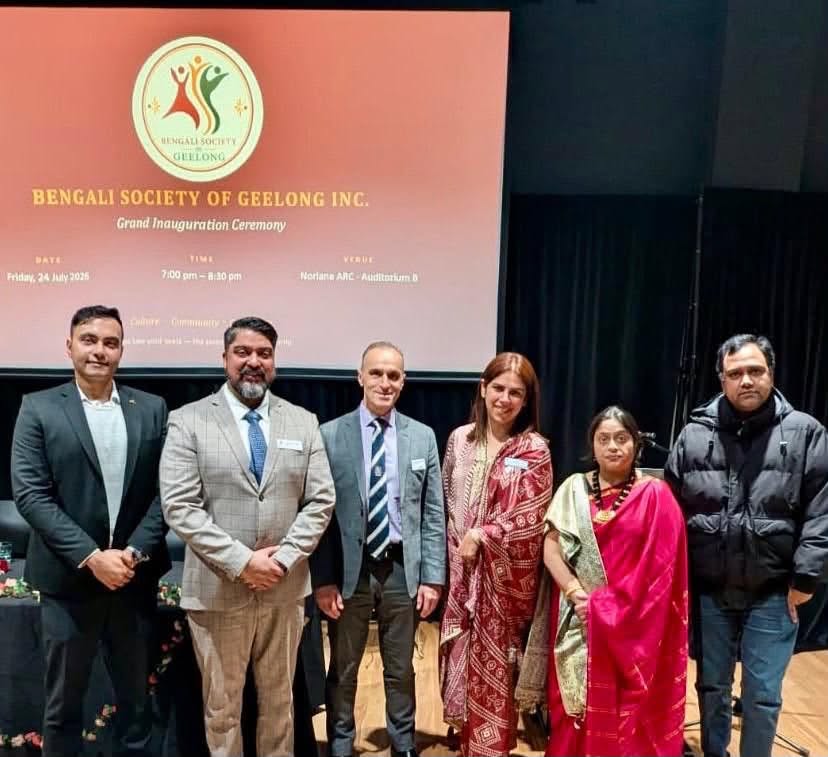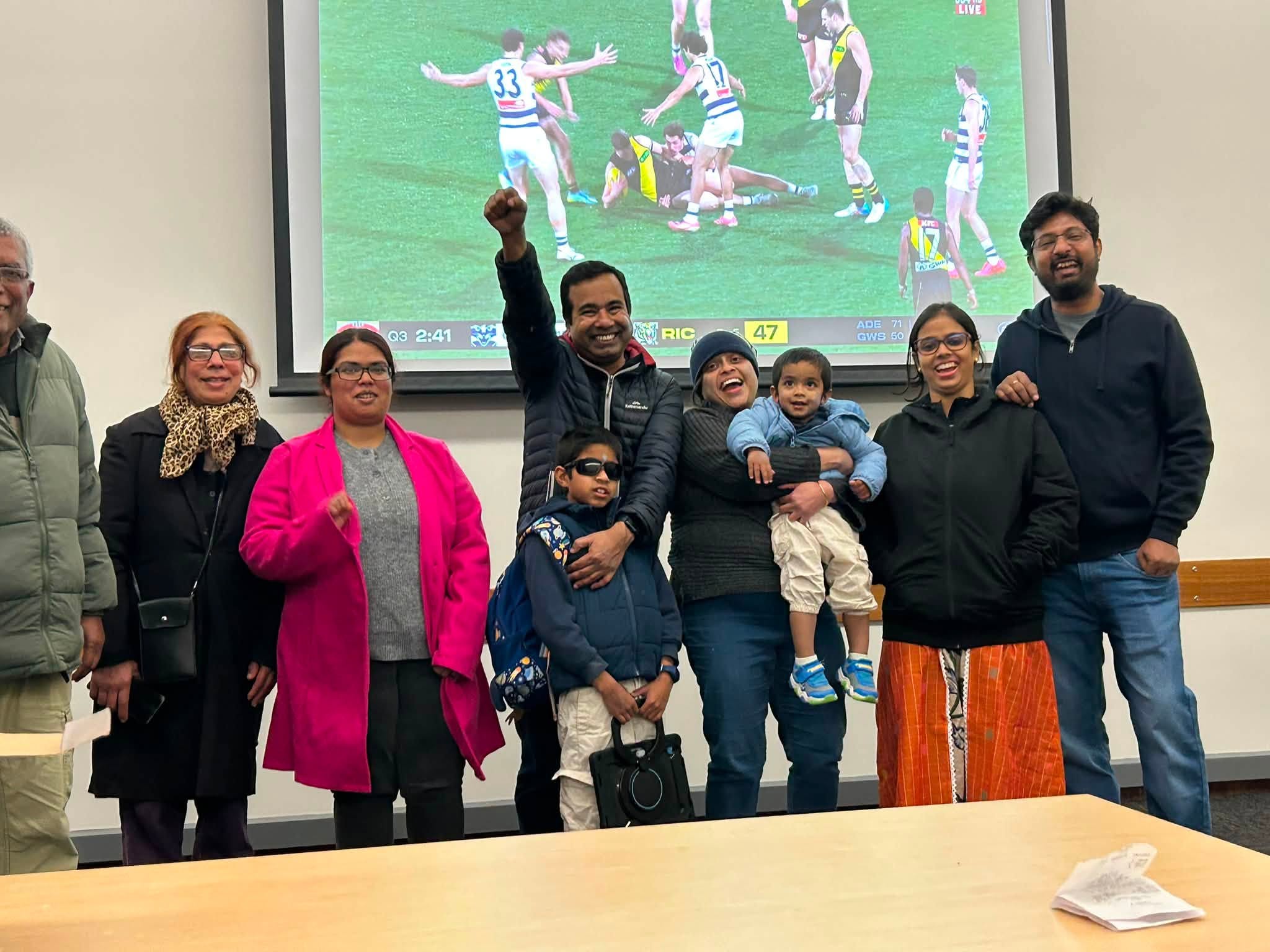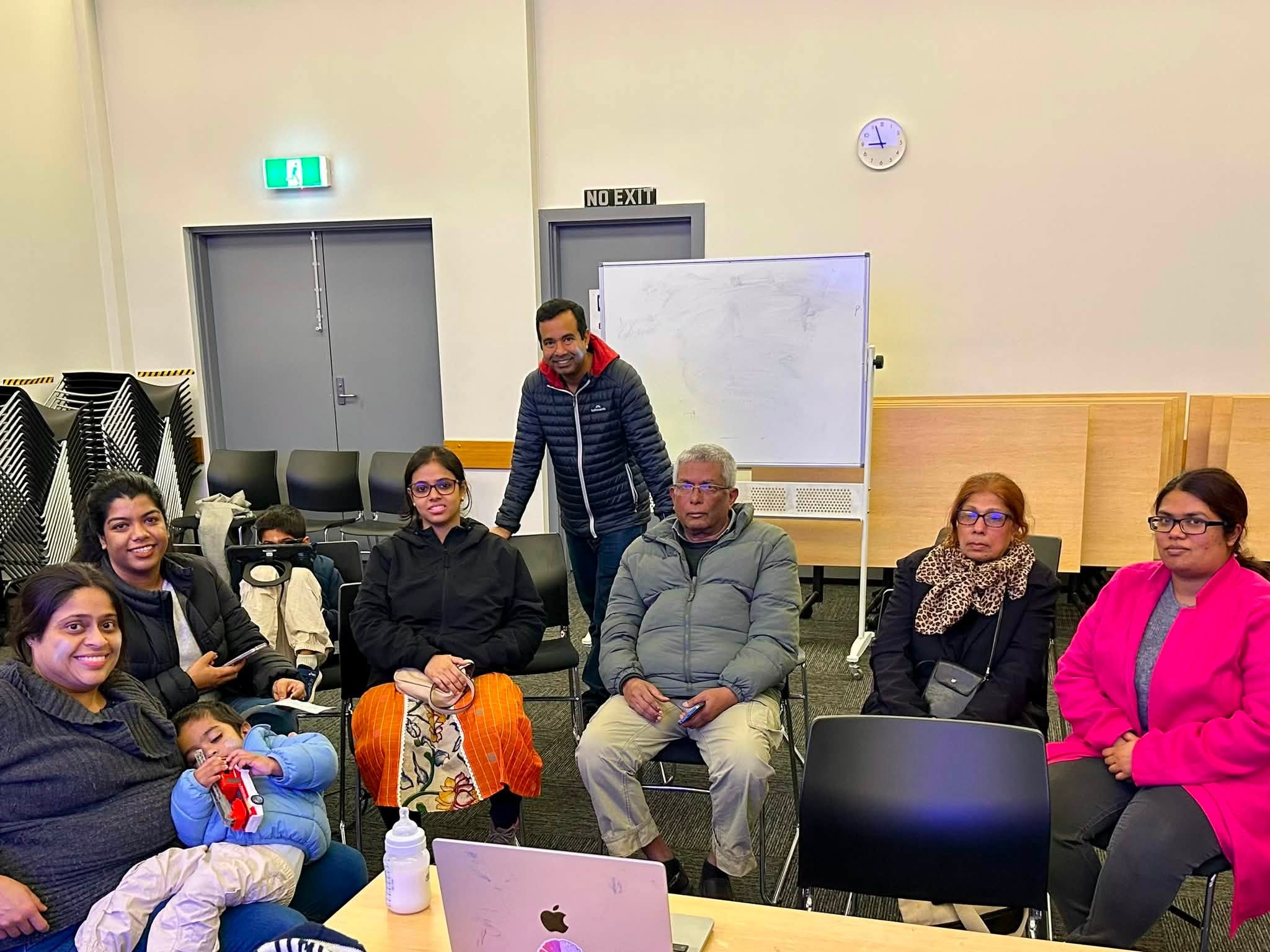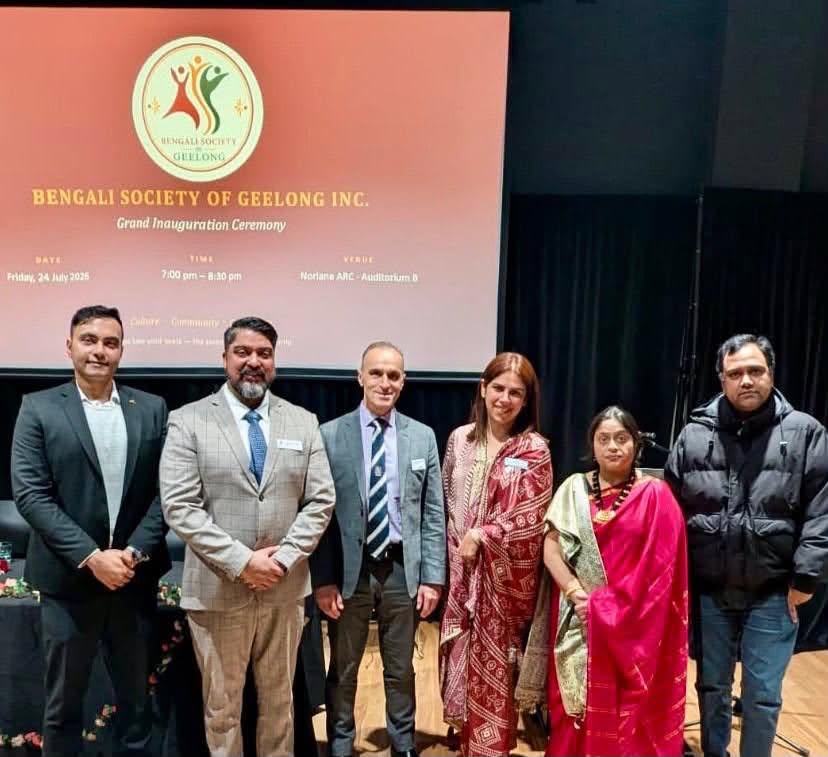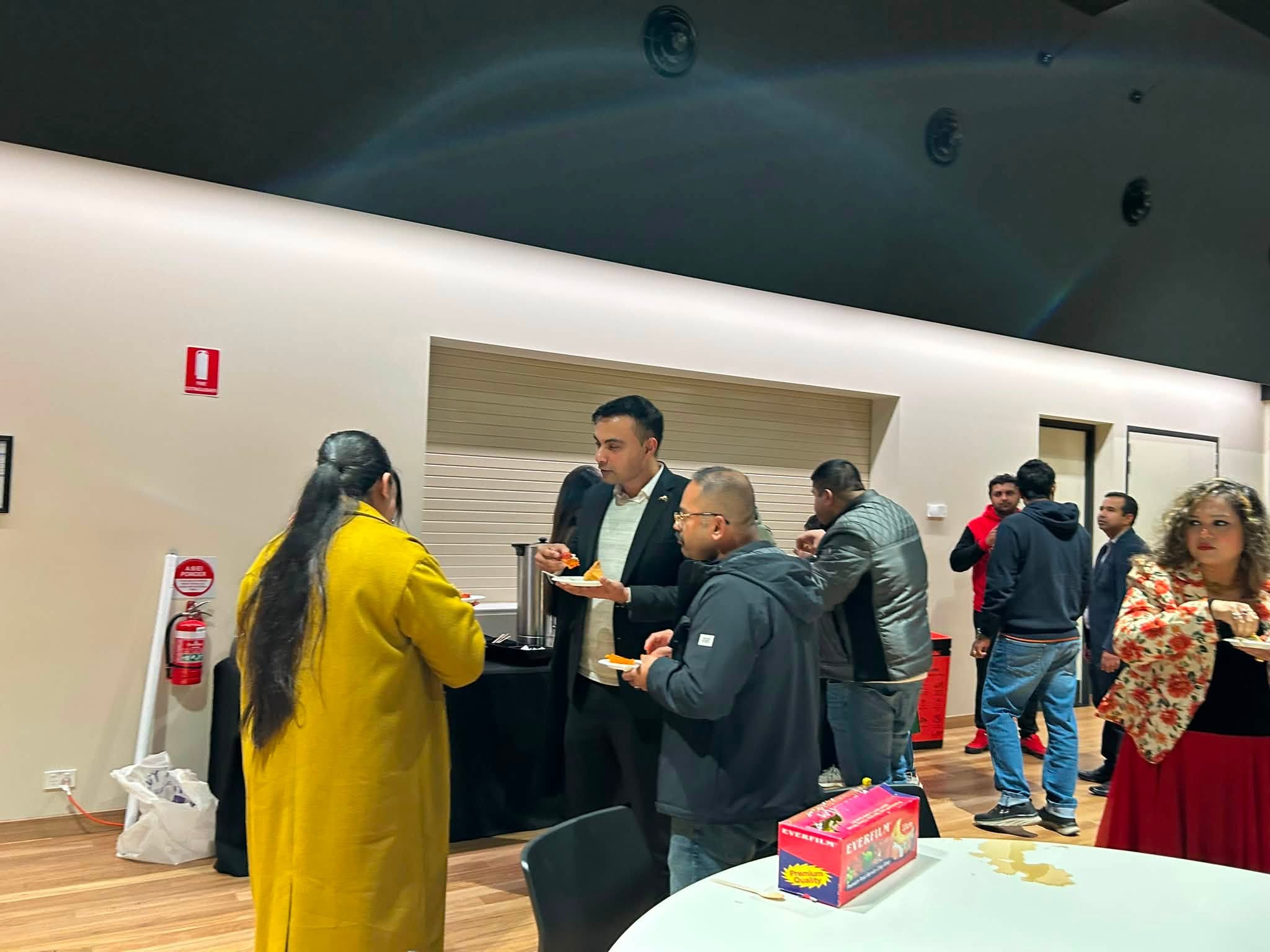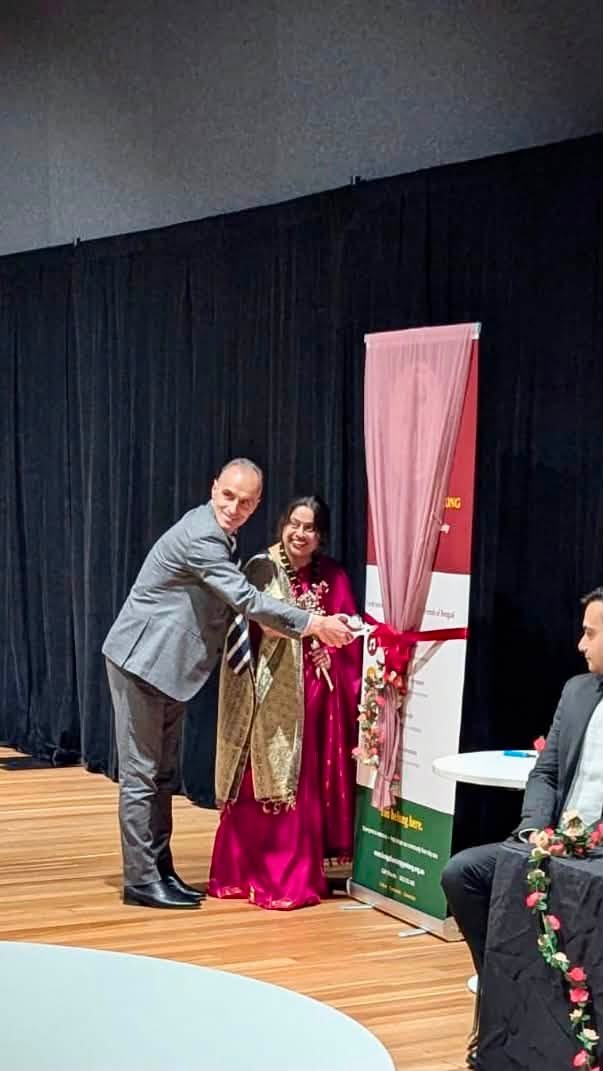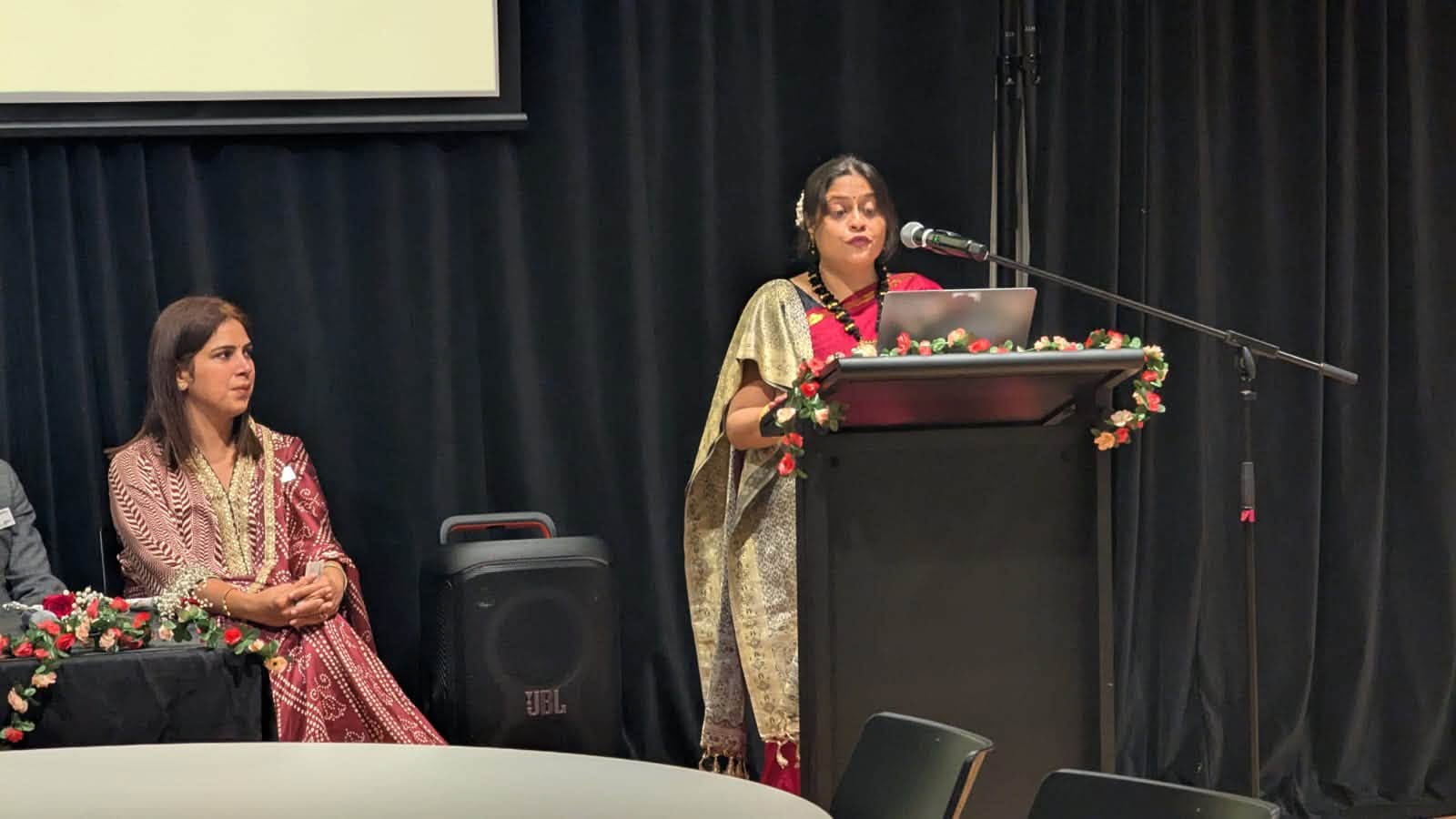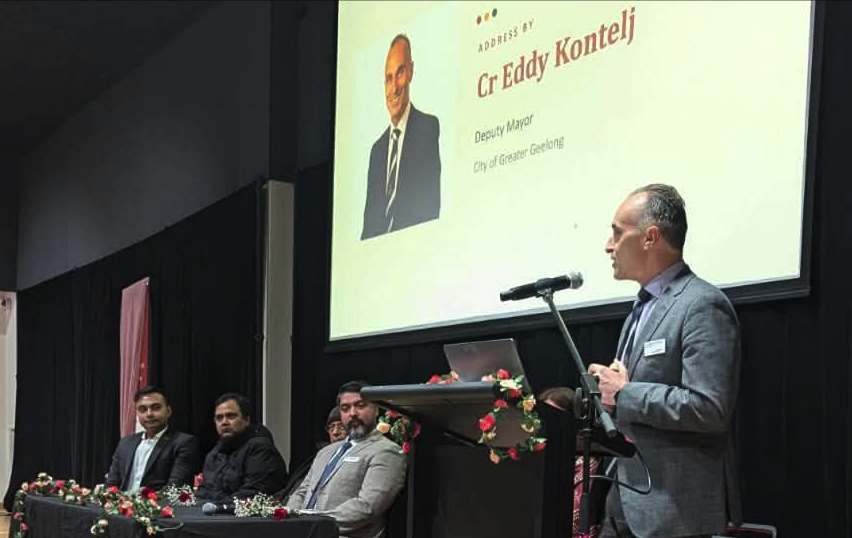
A new chapter begins

Rooted in heritage. United in community.

Welcome to the Bengali Society of Geelong — a vibrant, inclusive and transparent community where every voice matters, every family belongs and every generation stays connected to Bengali culture.

Inclusive Community-led Future-focused
Who we are

A welcoming home for Bengalis and friends of Bengal.

We bring together people from across Geelong and surrounding regions to celebrate culture, strengthen friendships, support families and create opportunities for the next generation.

Our mission

Building tomorrow's Bengali community, together.

We aim to create one of Regional Victoria's most vibrant and inclusive Bengali communities while embracing the multicultural spirit of Australia.

Celebrate Bengali cultureFestivals, music, arts, literature, food and shared traditions.
Support families and newcomersPractical connection, friendship and a sense of home.
Empower young peopleYouth leadership, creativity and meaningful participation.
Serve the wider communityCollaboration, volunteering and positive local impact.
Our guiding values

We believe strong communities are created through trust, openness and respect.

Equality

Every member deserves dignity, opportunity and an equal voice.

Integrity

We act with honesty and do what is right for the community.

Transparency

Open communication creates confidence and lasting trust.

Respect

We welcome different views and treat one another with care.

Service

Leadership is a responsibility to support, not a title to hold.

Unity

We achieve more when we listen, collaborate and move forward together.

Bengal and the world

Bengal's footprint across the world

Discover remarkable stories of how people from Bengal—and ideas born in Bengal—have influenced science, literature, music, cinema, sport, medicine and culture, while building unexpected connections with Australia and the wider world.

Bengali alphabet and script

One of the world’s great languages

Bengali is spoken by more than 250 million people, making it one of the world’s most widely spoken native languages.

Historic handwritten Bengali manuscript

A script with ancient roots

The Bengali script developed from the ancient Brahmi writing tradition and supports a literary heritage stretching back more than a thousand years.

Shaheed Minar memorial in Dhaka

A language movement with global impact

International Mother Language Day is observed worldwide on 21st February, inspired by the Bengali Language Movement of 1952 and formally recognised by UNESCO in 1999.

Portrait of Rabindranath Tagore

Tagore’s Song Offerings reached the world

Rabindranath Tagore became the first non-European Nobel laureate in Literature in 1913. His English collection Gitanjali: Song Offerings played a central role in bringing his poetry to an international audience.

Swami Vivekananda

Vivekananda inspired the world

In 1893, Swami Vivekananda captivated a global audience at the World's Parliament of Religions in Chicago, introducing Vedanta and the ideals of religious harmony to the West.

Portrait of filmmaker Satyajit Ray

Satyajit Ray on the world stage

Satyajit Ray received an Honorary Academy Award in 1992. His films also earned major international honours, including the Best Human Document award at Cannes for Pather Panchali in 1956, the Golden Lion at Venice for Aparajito in 1957, and Silver Bear awards for directing at Berlin in 1964 and 1965.

Ravi Shankar

The sitar conquered the world

From the 1950s onward, Ravi Shankar introduced Indian classical music to global audiences. His collaborations with George Harrison and performances around the world made the sitar an international symbol of Indian music.

Portrait of physicist Satyendra Nath Bose

The “boson” carries a Bengali name

In 1924, physicist Satyendra Nath Bose developed the ideas behind Bose–Einstein statistics. The term boson was later coined in his honour and now names one of the two fundamental classes of particles in physics.

Two Nobel economists shaped global development

Amartya Sen received the 1998 Nobel Prize in Economic Sciences for reshaping global thinking on poverty and human development. Abhijit Banerjee received the 2019 Nobel Prize for pioneering experimental approaches to reducing poverty.

Muhammad Yunus

Microfinance became a global movement

Muhammad Yunus, founder of Grameen Bank, pioneered microcredit as a way to support people excluded from traditional banking. In 2006, he and Grameen Bank received the Nobel Peace Prize for advancing economic and social development from below.

Leander Paes

One of tennis' greatest doubles champions

Leander Paes, born in Kolkata, won 18 Grand Slam doubles and mixed doubles titles and an Olympic bronze medal in 1996, becoming one of the most successful doubles players in tennis history.

Jhumpa Lahiri

Bengal's stories reached readers worldwide

Jhumpa Lahiri, born to an immigrant Bengali family in USA, won the 2000 Pulitzer Prize for Fiction for Interpreter of Maladies. Her novels have introduced Bengali identity and the immigrant experience to millions of readers around the world.

Siddhartha Mukherjee

A Pulitzer-winning physician and author

Siddhartha Mukherjee, born to a Bengali family in New Delhi, won the 2011 Pulitzer Prize for The Emperor of All Maladies. His bestselling books have shaped global understanding of cancer, genetics and medicine.

A selection of traditional Bengali dishes

A cuisine shaped by global exchange

Bengali food reflects centuries of contact with other cultures. From the 16th century onward, Portuguese influence helped popularise chhana-based sweets, while colonial and Chinese communities in Kolkata later contributed techniques and flavours that became part of modern Bengali and Indian cuisine.

Australian Rules Football being played in India

Australian Footy in Bengal

Australian Rules Football in India began in Kolkata. After school clinics in 2006 and an official launch by Ricky Ponting in 2008, Bengal became the birthplace of Footy in India, producing the country’s first AFL International Cup players and helping build the sport nationwide.

Tramjatra connecting Melbourne and Kolkata

Two tram cities, one friendship

Melbourne and Kolkata are among the few cities outside Europe with a long tram tradition. In 1996, Melbourne tram conductor Roberto D'Andrea founded Tramjatra, a cultural exchange that has connected artists, tram workers and communities in both cities while celebrating and helping preserve Kolkata's historic trams.

Geelong waterfront

A long Bengali story in Geelong

The first known Bengali family in Geelong dates back to the early 1970s, marking more than half a century of Bengali contribution to the region’s multicultural life.

Join the journey

You belong here.

Whether you are new to Geelong, have lived here for years, are raising the next generation or simply love Bengali culture, we invite you to help shape this community from the beginning.